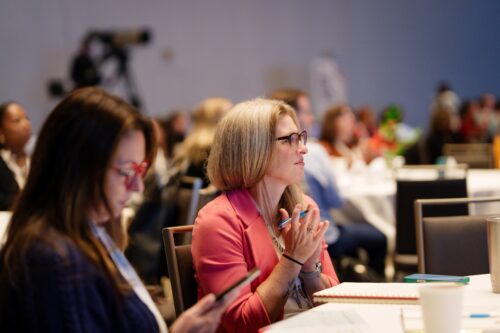
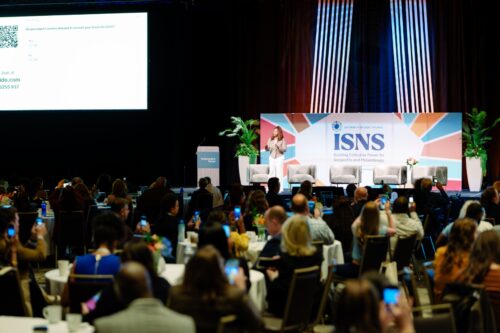
In the weeks since 740 of us gathered in Atlanta for Independent Sector’s National Summit 2025, I’ve been reflecting on what made this moment different. Not just as someone whose job it is to measure impact, but as someone who believes deeply in the power of the charitable sector to create the future we need.
The data tells one story—83% of participants made connections they wouldn’t have found anywhere else, 88% now see themselves as part of a movement larger than their organization, and 74% are already pursuing new partnerships born at the Summit. But beneath these numbers lies something more profound: a sector rediscovering its collective strength and its essential role in building a nation where everyone can thrive.
Here are five transformative takeaways that signal not just what happened in Atlanta, but where we’re heading together.
1. The Hunger for Community Runs Deeper Than We Realized
“I came away with a renewed sense that I’m part of something bigger than my organization.”
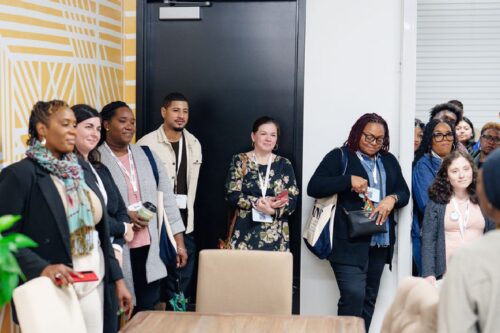
This sentiment, echoed by participant after participant, reveals something critical about this moment in our sector. In an era of isolation—organizational, professional, and personal—the Summit created what one attendee called “a space where I could connect with people I would never have met otherwise.”
The need for community isn’t just nice to have; it’s infrastructure. When 87% of participants report feeling more connected to the broader charitable sector after just three days together, we’re witnessing the construction of relationship-based infrastructure that will sustain our work long after the conference rooms empty.
We saw this hunger manifest in unexpected ways: in the spontaneous conversations that continued past scheduled session times, in the 400+ people who joined our Summit LinkedIn Group to keep the dialogue going, and in the 107 individuals who volunteered their contact information for future programming before they even left Atlanta.
The message is clear: Our sector is strongest when we create intentional spaces for connection. The isolation of individual organizational siloes is not serving us. We need each other—not occasionally, but consistently—to do this work well.
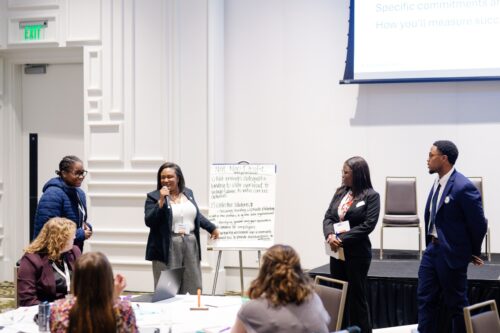
2. A Movement Identity Is Emerging
One of the most powerful shifts we measured was conceptual: how people see themselves in relation to the broader sector.
Before the Summit, we asked participants to rate their sense of connection to “a movement larger than their organization.” After three days of cross-sector dialogue, that measure jumped significantly. More telling were the words people used: “our sector,” “our movement,” “we” instead of “my organization” or “I.”
This isn’t semantics—it’s a fundamental reframing of identity and power.
“Civil society thrives when we form groups based on shared values,” one participant observed, “and we don’t have to share LOTS of values right now to still build coalitional interests.”
This movement consciousness is showing up in concrete commitments. When 71% of participants plan to share Summit learnings with their boards, and 52% are planning deeper engagement with Independent Sector, we’re seeing the beginnings of a sector that understands its collective strength.
The Student Leadership Academy exemplified this beautifully. Emerging leaders didn’t just attend sessions—they integrated into the fabric of the Summit, building relationships across experience levels and organizational types. As one SLA participant put it: “The Summit helped me see that I belong in this sector, even as a student.”
This is how movements are built: one relationship, one shared insight, one collaborative commitment at a time.
3. Cross-Sector Spaces Are Our Superpower
Here’s what makes Independent Sector’s convening power unique and essential: We bring nonprofits AND philanthropy into the same room.
“When I convene nonprofits and philanthropists,” one participant wrote, “I will have them work as partners through authentic and vulnerable connections”—a direct insight they took from experiencing the power dynamics we intentionally addressed throughout the Summit.
The cross-sector model did what it’s designed to do: create conversations that simply don’t happen in funder-only or nonprofit-only spaces. Power rebalancing emerged as a theme in 75% of observed sessions. We heard participants articulate truths like “Nonprofits need to vet funders just as funders vet nonprofits” and “Community members are the experts.”
This wasn’t conflict—it was honest dialogue. And that dialogue is generating new possibilities.
Our pre-summit sessions amplified this dynamic. The CEO session created a peer-only space for candid conversation among leaders facing similar challenges. At the same time, our Policy Professionals Advocacy Intensive and Finance Professionals session brought attendees together to strategize and build vital skills for navigating today’s fast-moving environment.
When we measured what made Summit connections “unique,” the overwhelming answer was the cross-sector model. As one participant summarized: “The cross-sector model—bringing nonprofits and foundations together—created conversations that just don’t happen anywhere else.”
Our sector needs more of these spaces, not fewer.
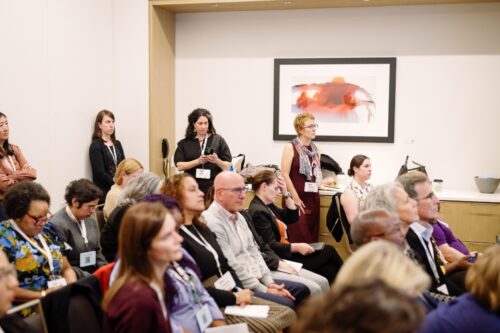
4. The Programming Revealed What We’re Hungry to Learn
When we analyzed which sessions drew the largest crowds and earned the highest ratings, clear priorities emerged—and they signal where our sector is leaning into the future.
Technology and AI dominated with 21% of all session feedback mentioning artificial intelligence. But here’s what’s interesting: The most transformative insight wasn’t technical. It was “AI is all about change management.” Participants weren’t just seeking tools—they were seeking frameworks for organizational transformation. The CORE framework (Consent, Oversight, Responsibility, Equity) resonated because it positioned technology adoption as a question of values, not just efficiency.
Advocacy empowerment emerged as the most frequently cited transformative insight. “Advocacy is not illegal” appeared again and again in participant reflections, suggesting we’ve addressed a critical knowledge gap that was preventing organizations from engaging in policy work. The impact is already visible: 43% of participants plan to implement advocacy practices learned at the Summit.
Workforce sustainability sessions drew standing-room-only crowds, reflecting the sector’s recognition that we cannot serve our communities if we cannot support our teams. From compensation equity to leadership transitions, participants were hungry for concrete tools to build thriving workforces.
Equity analysis appeared not as a separate track but embedded across 75% of sessions, with power dynamics discussed explicitly. When participants cite insights like “When Black people do well, everyone else does better” and “trust comes from going to the community and community defining what they need,” we’re seeing equity move from concept to operational practice.
The curriculum did more than inform—it equipped. Participants documented 65 distinct tools, frameworks, and resources they’re taking back to their organizations. This is how we build sector capacity: one practical framework at a time, tested in real-world application, shared across organizational boundaries.
5. Advocacy Is Our Collective Courage
If there’s one insight that captured the transformative potential of the Summit, it’s this: “Advocacy is not illegal.”
Simple words. Profound impact.
This message appeared more frequently than any other single takeaway. It unlocked action.
“I’m ready to go home and start conversations to bring people out of siloes,” one participant wrote. “I am committed to bringing the schools, police, businesses, nonprofits, faith, and hospitals together to try and find solutions to our gun violence.”
Another committed to “tell my funders about why advocacy is so important and is legal!”
This is what collective courage looks like: individuals empowered with knowledge, supported by community, taking that knowledge back to their organizations and their communities to create change.
Participants were equipped with resources like the Bolder Advocacy Toolkit, learned about the latest tax code changes, and received advocacy guidance targeted to their state. With this new information, participants gained confidence to engage in policy work they had previously avoided
When we strengthen our collective advocacy capacity, we strengthen our collective power. Not power over, but power with—the power to shape the policies that affect our ability to serve our communities.
What This Means for Our Future
Standing in Atlanta, watching 740 people from 485 organizations across all 50 states connect, learn, and commit to action, I saw the future of our sector.
It’s collaborative, not competitive. It’s cross-sector, not siloed. It’s movement-oriented, not organization-centric. It’s grounded in equity, not just aspiring to it. It’s advocacy-forward, not advocacy-hesitant.
Most importantly, it’s already happening.
The 74% pursuing new partnerships aren’t waiting for perfect conditions—they’re building the infrastructure our sector needs now. The 52% planning deeper engagement with Independent Sector aren’t passive observers—they’re active architects of a healthier charitable sector. The organizations implementing advocacy practices, adopting AI with ethical frameworks, and centering community voice aren’t following a trend—they’re creating the future.
This is the sector we’re building together: one that recognizes its collective strength, that creates intentional spaces for cross-sector dialogue, that equips practitioners with concrete tools, and that courageously engages in the advocacy work our communities need.
Independent Sector’s National Summit 2025 wasn’t just a successful event. It was a signal of strength, a demonstration of hunger for connection, and a catalyst for the transformation our sector is ready to create.
I left Atlanta not just with data—though the data is compelling—but with hope. Hope rooted in evidence of what’s possible when we come together. Hope grounded in the concrete commitments people made to each other and to the communities we serve. Hope fueled by the recognition that we are, indeed, building a movement.
The work continues. The connections deepen. The future we’re building together—a charitable sector that serves the needs of all—is already taking shape.
I’m honored to measure it. I’m grateful to be part of it. And I’m excited to see where we take it next.
Umer Rupani is Director of Impact Measurement and Knowledge Management at Independent Sector, where he designs evaluation systems that advance IS’s mission of creating a healthy charitable sector. He believes that rigorous measurement, when done with care and purpose, reveals not just what is but what’s possible.